

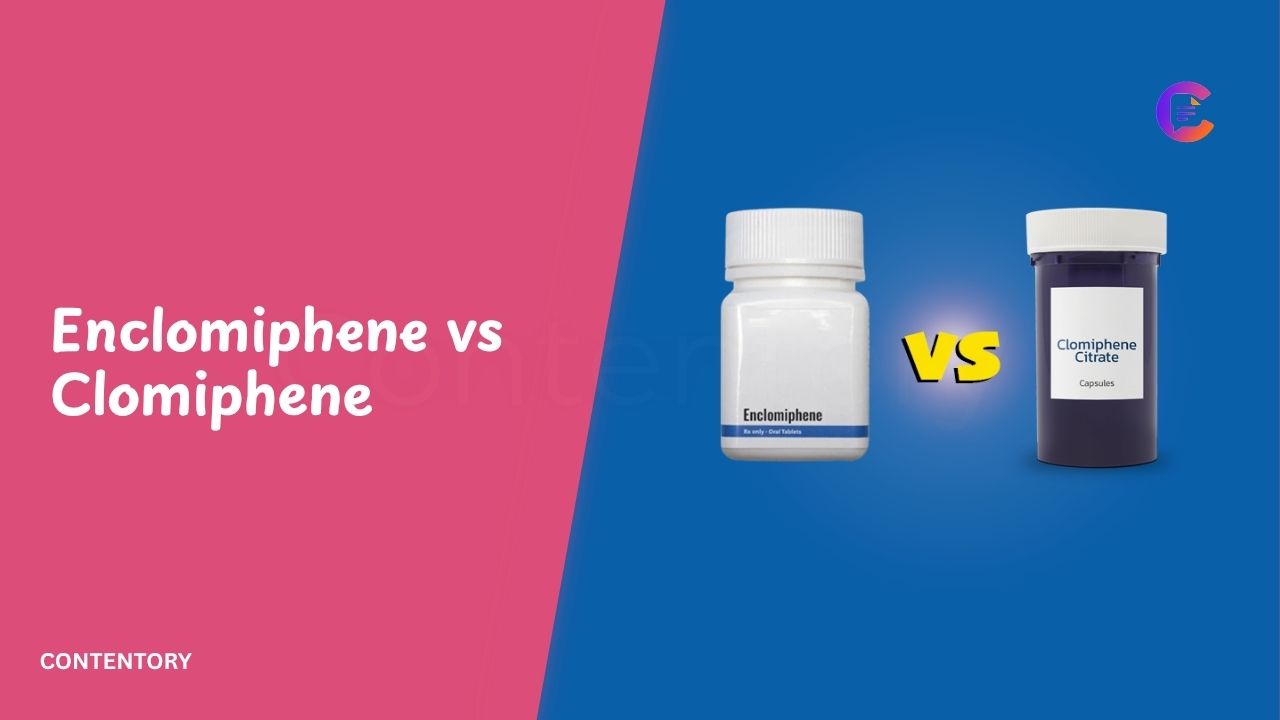
The question of enclomiphene vs clomiphene often comes up when people research treatments that may increase testosterone without directly replacing the hormone. Both drugs belong to a group called selective estrogen receptor modulators, or SERMs. Clomiphene contains two related compounds, enclomiphene and zuclomiphene, while enclomiphene refers specifically to the enclomiphene component. Research has investigated both medicines in men with certain forms of low testosterone, particularly when preserving sperm production is an important consideration. However, their regulatory status and evidence base are not identical.
Clomiphene has been studied extensively and is sometimes prescribed off-label for men with testosterone deficiency or infertility. Enclomiphene has also been investigated in clinical trials, including randomized studies involving men with secondary hypogonadism. However, the U.S. Food and Drug Administration has stated that no FDA-approved drug product contains enclomiphene as its active ingredient. Therefore, online discussions about these medicines should not be interpreted as medical advice or as evidence that one medication is appropriate for a particular person.
What Is Clomiphene?
Clomiphene citrate is a SERM that changes estrogen feedback in the reproductive hormone system. In men, this can increase signaling from the hypothalamus and pituitary, which may raise luteinizing hormone and follicle-stimulating hormone. Those hormones can stimulate the testes to produce more testosterone and support sperm production. The American Urological Association notes that clomiphene is the most commonly studied SERM for infertile men with low testosterone.
Clomiphene is also an established prescription medicine with an FDA-approved use in women for ovulatory dysfunction. Its use in men is different because male hypogonadism and infertility are not the approved indication for the drug. The Endocrine Society notes that clomiphene is sometimes used for male hypogonadism but is not FDA-approved for that indication. This distinction matters because an off-label prescription is not the same as an FDA-approved indication.
What Is Enclomiphene?
Enclomiphene is one of the two stereoisomeric components of clomiphene. The other is zuclomiphene. Researchers have studied enclomiphene separately because isolating the component may produce a more targeted pharmacologic profile than using the mixture. Clinical research has particularly examined enclomiphene in men with secondary hypogonadism and low testosterone.
The regulatory situation is important. The FDA stated in its advisory-committee materials that there were no FDA-approved drug products containing enclomiphene citrate as the active ingredient. Enclomiphene has therefore remained an investigational or non-FDA-approved treatment in the United States rather than an FDA-approved treatment for male hypogonadism. Availability through particular clinics or pharmacies does not by itself establish FDA approval.
Enclomiphene vs Clomiphene: Key Difference
The most basic difference is their composition. Clomiphene is a mixture of enclomiphene and zuclomiphene, whereas enclomiphene represents one specific component. Both affect estrogen signaling within the reproductive hormone axis, but they should not be treated as interchangeable products simply because enclomiphene is part of clomiphene. Their pharmacologic profiles, evidence, regulatory status, and clinical use can differ.
Another major difference concerns the evidence available for male treatment. Clomiphene has a longer history of off-label use in men, and professional urology guidance discusses SERMs such as clomiphene in selected infertile men with low testosterone. Enclomiphene has been evaluated in randomized trials, but it does not have an FDA-approved drug product in the United States. Consequently, comparing them requires looking at both clinical evidence and regulatory status rather than focusing only on testosterone numbers.
How Do Both Medications Work?
Both medications can influence the hypothalamic-pituitary-gonadal axis. By reducing estrogen’s negative feedback at central estrogen receptors, a SERM can increase signaling that leads to greater secretion of LH and FSH. LH can stimulate testosterone production in the testes, while FSH plays an important role in spermatogenesis. This mechanism differs from testosterone replacement, which supplies testosterone externally and can suppress the body’s own gonadotropin signaling.
This distinction becomes particularly relevant when fertility matters. The AUA/ASRM male-infertility guideline explains that SERMs may be considered for infertile men with low serum testosterone and can increase endogenous testosterone without the same direct suppression of spermatogenesis associated with testosterone monotherapy. However, the guideline also emphasizes that these medicines are not FDA-approved for use in men. Treatment decisions therefore require evaluation of the underlying cause and the patient’s fertility goals.
Potential Benefits of Clomiphene
One potential benefit of clomiphene in selected men is an increase in endogenous testosterone. Research has reported improvements in testosterone and sperm concentration among some hypogonadal or infertile men receiving clomiphene. A PubMed-indexed study found that testosterone and sperm concentration improved in men with hypogonadism and unexplained infertility. However, individual responses vary, and laboratory improvement does not automatically mean every symptom will improve.
Another potential advantage involves fertility preservation compared with exogenous testosterone. The AUA/ASRM guideline explains that testosterone monotherapy should not be prescribed to men who are interested in current or future fertility because testosterone can suppress gonadotropin secretion and impair sperm production. SERMs work differently by encouraging the body’s own hormone production. This does not make clomiphene appropriate for everyone, but it explains why clinicians may consider it in selected cases.
Potential Benefits of Enclomiphene
Clinical trials have reported that enclomiphene can increase testosterone while maintaining sperm production in men with secondary hypogonadism. In one randomized phase II study, enclomiphene increased morning testosterone and LH while preserving sperm counts. Researchers concluded that it addressed biochemical features of secondary hypogonadism without the reduction in sperm production observed with topical testosterone in the study.
A later randomized phase III research program also reported increases in testosterone, LH, and FSH with enclomiphene, while sperm concentration remained in the normal range during the treatment period. These results help explain why enclomiphene has attracted attention among researchers studying testosterone restoration and fertility. Still, these trials do not establish that enclomiphene is universally safer or more effective than clomiphene for every patient.
Enclomiphene vs Clomiphene for Testosterone
Both medications have evidence suggesting they can increase testosterone in appropriately selected men. A 2025 systematic review and meta-analysis of randomized controlled trials found that SERM therapy, including clomiphene and enclomiphene, significantly increased total testosterone, LH, and FSH compared with placebo. The analysis also found no significant difference in total testosterone between SERM therapy and testosterone gel in the included studies.
However, testosterone concentration should not be the only outcome considered. Current Endocrine Society guidance emphasizes that diagnosing hypogonadism requires compatible symptoms and consistently low testosterone measurements, with appropriate evaluation of the underlying cause. A single low laboratory result or symptoms such as fatigue alone do not establish the diagnosis. Treatment should therefore be based on a medical assessment rather than a comparison of headline testosterone increases.
Enclomiphene vs Clomiphene for Fertility
Fertility is one of the most important reasons SERMs may be considered in men with testosterone deficiency. Testosterone replacement can suppress the hypothalamic-pituitary-gonadal axis and reduce sperm production. The AUA/ASRM guideline specifically advises against testosterone monotherapy for men interested in current or future fertility. SERMs instead attempt to stimulate endogenous hormone production, which can preserve sperm production in appropriate patients.
Studies involving enclomiphene have reported preservation of sperm concentration, while studies of clomiphene have also documented improvements in testosterone and sperm-related measures in selected men. These findings do not mean either medication guarantees fertility or conception. Male infertility can result from many different conditions, including problems involving the testes, pituitary, hormones, or reproductive tract. The cause must therefore be assessed before selecting treatment.
Side Effects and Safety Considerations
Clomiphene has a well-established safety profile in its approved female indication, but men using it off-label may experience adverse effects as well. Published research involving men has reported issues such as changes in mood, libido, headaches, and visual symptoms. The FDA-approved clomiphene labeling contains an important warning about visual disturbances, including blurred vision, spots, flashes, and other visual symptoms. Some visual problems have been reported to persist after treatment.
Enclomiphene also requires medical supervision because its long-term safety profile is not as well established as that of an FDA-approved treatment for male hypogonadism. A 2024 retrospective study comparing patients who had received clomiphene and later enclomiphene reported fewer documented adverse events with enclomiphene and a smaller change in estradiol. However, the study involved only 66 patients and was retrospective, so its findings cannot establish that enclomiphene is safer for all patients.
What Does Research Say About Enclomiphene vs Clomiphene?
Direct head-to-head evidence remains more limited than many online comparisons suggest. Much of the clinical literature compares either medication with placebo or testosterone therapy rather than conducting large randomized trials directly comparing enclomiphene with clomiphene. The 2025 systematic review found meaningful benefits from SERM treatment overall, but it did not establish a universal advantage of one specific SERM for every patient.
A 2024 retrospective study did directly examine patients who received both drugs at different times. It reported a median testosterone increase of 166 ng/dL with enclomiphene compared with 98 ng/dL during clomiphene treatment, but the difference in testosterone increase was not statistically significant. The study did find lower estradiol changes and fewer documented adverse events during enclomiphene treatment. Because the study was observational and relatively small, larger controlled trials are needed.
FDA Approval and Off-Label Use
Regulatory status is one of the clearest differences when discussing these medicines. The FDA has stated that no FDA-approved drug product contains enclomiphene as its active ingredient. Enclomiphene therefore should not be described as an FDA-approved treatment for male hypogonadism in the United States. Its clinical development has included trials designed to evaluate testosterone restoration in men, but research status and regulatory approval are separate matters.
Clomiphene has FDA approval for inducing ovulation in women with ovulatory dysfunction, but that approval does not cover male hypogonadism. The Endocrine Society specifically notes that clomiphene is sometimes used for male hypogonadism without FDA approval for that indication. The AUA/ASRM guideline likewise notes that SERMs used in male infertility are not FDA-approved for men. This is why a prescription for a man may represent off-label medical use rather than an approved indication.
Which One May Be Discussed in Clinical Care?
There is no single medication that is appropriate for every man with low testosterone. Clinicians first need to establish whether hypogonadism is actually present and determine whether it is primary or secondary. The Endocrine Society recommends confirming low morning testosterone and evaluating the underlying cause. The AUA also notes that LH can help guide decisions when considering SERM treatment, because men with primary testicular dysfunction may respond differently from men with secondary hypogonadism.
Fertility goals can also change the discussion. A man planning to have children may need a different treatment strategy from someone who has no near-term fertility plans. The AUA/ASRM guideline identifies SERMs, hCG, and aromatase inhibitors as possible options in selected infertile men with low testosterone. The appropriate approach depends on laboratory results, symptoms, fertility objectives, underlying disease, medications, and other health factors.
Enclomiphene vs Clomiphene: What to Know Before Treatment
People researching these medications should avoid assuming that higher testosterone automatically means better treatment. Testosterone levels fluctuate, laboratory testing has limitations, and symptoms can have causes unrelated to testosterone. The Endocrine Society’s 2026 statement emphasizes accurate diagnosis using consistently low testosterone measurements alongside relevant symptoms and appropriate evaluation. It also notes that reversible contributors should be addressed when applicable.
It is also important to distinguish legitimate medical treatment from products marketed online as research chemicals or hormone boosters. A product’s availability through a website or compounding service does not establish FDA approval, quality, effectiveness, or long-term safety. Patients considering clomiphene or enclomiphene should discuss the decision with a qualified clinician who can review hormone testing, fertility goals, medical history, and potential adverse effects.
Conclusion
The enclomiphene vs clomiphene comparison centers on two related SERMs with overlapping biological effects but different compositions and regulatory histories. Clomiphene contains both enclomiphene and zuclomiphene, while enclomiphene represents one component of that mixture. Both have been studied for increasing endogenous testosterone in selected men, and research suggests that SERM therapy can raise testosterone while preserving sperm production in appropriate clinical settings.
The biggest practical point is that neither medicine should be selected solely from an online comparison. Clomiphene is used off-label in some men, while enclomiphene remains without an FDA-approved drug product in the United States. Research continues to evaluate their effectiveness and safety, including direct comparisons. For someone with possible hypogonadism or fertility concerns, diagnosis, underlying cause, fertility goals, laboratory findings, and medical supervision all matter when considering treatment.
Frequently Asked Questions
What is the main difference between enclomiphene and clomiphene?
Clomiphene is a mixture containing enclomiphene and zuclomiphene. Enclomiphene is the isolated enclomiphene component.
Does enclomiphene increase testosterone?
Clinical trials have reported increased testosterone in men with secondary hypogonadism receiving enclomiphene.
Does clomiphene increase testosterone in men?
Research has found that clomiphene can increase testosterone in selected men with hypogonadism, although its use for male hypogonadism is off-label in the United States.
Which is FDA approved for male hypogonadism?
Neither enclomiphene nor clomiphene is FDA-approved specifically for treating male hypogonadism. The FDA has stated that no approved drug product contains enclomiphene as its active ingredient.
Can these medicines preserve sperm production?
Studies of SERMs, including enclomiphene and clomiphene, have reported preservation or improvement of sperm-related measures in selected men. Results vary by patient and underlying condition.
Is enclomiphene the same as clomiphene?
No. Enclomiphene is one component of clomiphene. Clomiphene contains both enclomiphene and zuclomiphene.
Are clomiphene and enclomiphene safe?
Both can have adverse effects, and the appropriate risk depends on the individual and treatment circumstances. Clomiphene’s FDA labeling includes warnings about potentially serious visual symptoms, while long-term safety data for enclomiphene remain more limited.
Can men take clomiphene for infertility?
Some clinicians use clomiphene off-label in selected infertile men, particularly when low testosterone is present. The AUA/ASRM guideline recognizes SERMs as a possible treatment option in appropriate cases.
Get More Update CONTENTORY