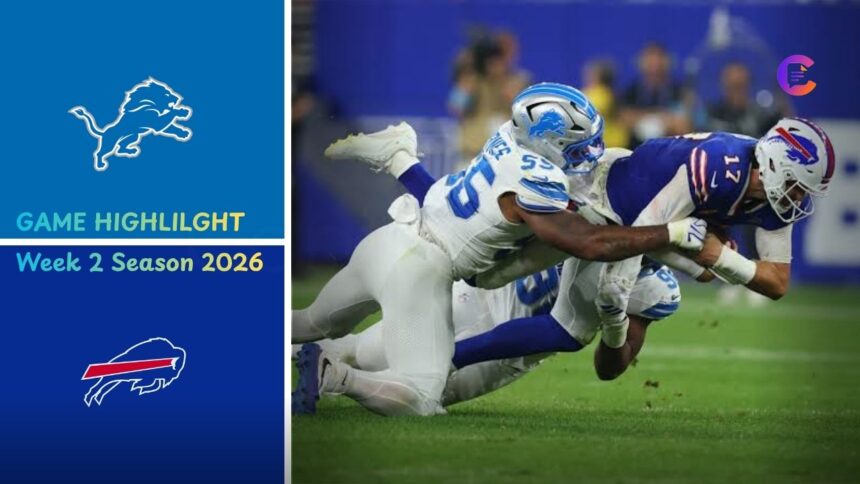

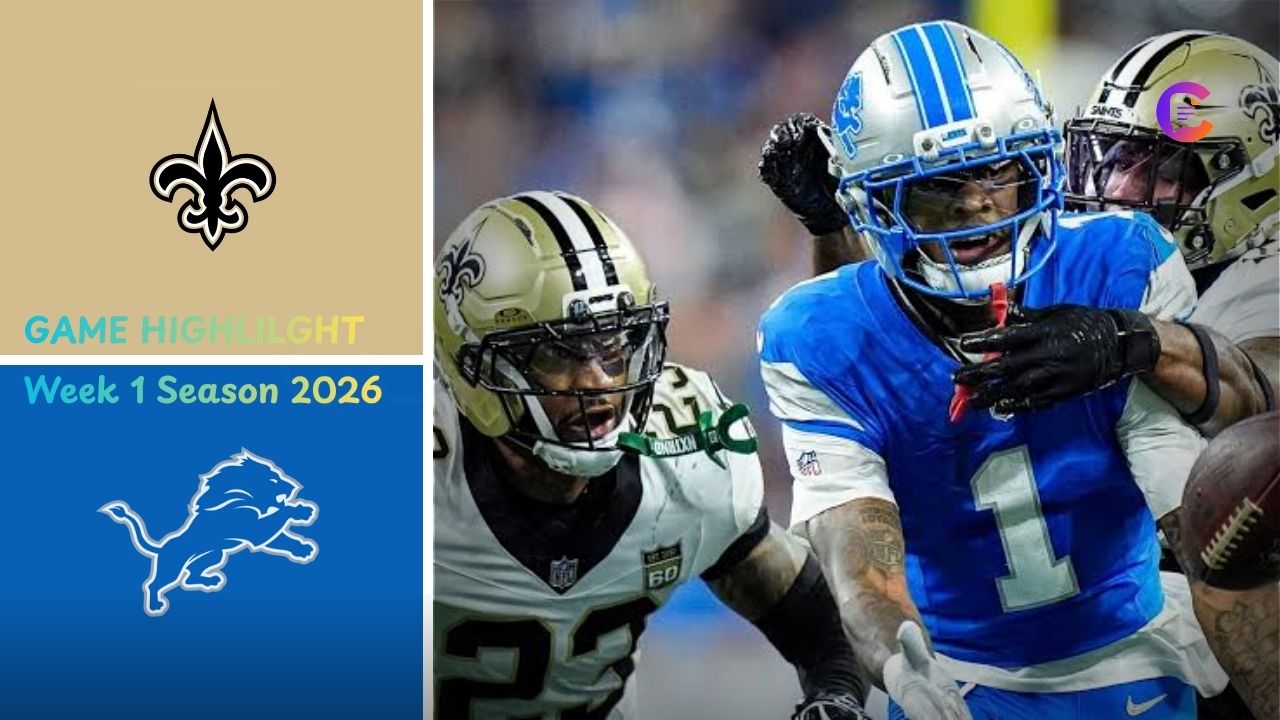
The Detroit Lions opened the 2026 NFL season with a dramatic 31-30 overtime victory over the New Orleans Saints at Ford Field on September 13, 2026. Detroit built a 21-point lead before New Orleans mounted a remarkable comeback behind rookie quarterback Tyler Shough. The Saints eventually forced overtime, but Detroit secured the win when Jared Goff connected with Amon-Ra St. Brown for a touchdown. New Orleans answered with an overtime touchdown of its own, but its two-point conversion attempt failed.
The box score showed a fascinating contrast. New Orleans produced 469 total yards, including 410 passing yards, while Detroit gained 369 yards and controlled the ball for 36:51. Jahmyr Gibbs powered the Lions with 156 rushing yards and two touchdowns, while Chris Olave delivered 182 receiving yards for the Saints.
Final Score and Match Overview
Detroit started quickly and controlled the first half, taking a 7-0 lead before halftime. Gibbs scored on a one-yard run in the opening quarter, and the Lions continued their momentum after halftime. Gibbs added another one-yard touchdown, while Goff found St. Brown for a 19-yard score. That sequence gave Detroit a commanding 21-0 advantage and appeared to put the game firmly in the Lions’ hands.
New Orleans refused to collapse. Kendre Miller scored on an eight-yard run, and Shough later connected with Devaughn Vele and Juwan Johnson for touchdowns. Carlson’s field goal helped close the gap, and Johnson’s nine-yard touchdown with 1:13 remaining tied the game at 24-24. The comeback forced overtime and created one of Week 1’s most dramatic finishes.
Final Score Table
| Team | Q1 | Q2 | Q3 | Q4 | OT | Final |
|---|---|---|---|---|---|---|
| New Orleans Saints | 0 | 0 | 14 | 10 | 6 | 30 |
| Detroit Lions | 7 | 0 | 14 | 3 | 7 | 31 |
Tyler Shough Leads New Orleans Comeback
Tyler Shough produced one of the most notable individual performances of Week 1. The Saints quarterback completed 35 of 56 passes for 410 yards, three touchdowns and two interceptions. His passing volume increased as New Orleans chased the game, and he repeatedly moved the Saints downfield during their second-half comeback.
Shough also showed composure after New Orleans fell 21 points behind. His touchdown passes to Devaughn Vele, Juwan Johnson and Noah Fant kept the Saints alive. The final touchdown came in overtime when Shough found Fant for an eight-yard score. However, the Saints could not complete the comeback because Shough’s two-point pass attempt fell incomplete.
Jared Goff and Detroit’s Passing Attack
Jared Goff completed 26 of 39 passes for 206 yards and two touchdowns without an interception. His numbers were less spectacular than Shough’s, but Goff made several important throws during Detroit’s early advantage and overtime possession. His efficiency also helped the Lions maintain control of the game for much of the afternoon.
Goff’s most important completion came in overtime. After Gibbs helped Detroit move into scoring range, Goff found Amon-Ra St. Brown for a four-yard touchdown. That score put the Lions ahead 31-24 and created the opportunity for New Orleans to respond. Detroit’s defense then had to survive one final Saints possession, which ended with the failed two-point attempt.
Jahmyr Gibbs Dominates the Ground Game
Jahmyr Gibbs was Detroit’s biggest offensive weapon. He carried the ball 29 times for 156 yards and two touchdowns, averaging more than five yards per carry. Both of his touchdowns came on one-yard runs, but his value extended far beyond those scores because he consistently created positive yardage and kept Detroit’s offense moving.
Gibbs also contributed in the passing game with five receptions for 30 yards. That gave him 186 yards from scrimmage and made him central to Detroit’s offensive strategy. His heavy workload became particularly important late in the game, including the overtime drive that eventually produced the winning touchdown.
Chris Olave Explodes for 182 Receiving Yards
Chris Olave was the standout receiver for New Orleans. He finished with 10 receptions for 182 yards, including a long catch of 47 yards. Although he did not score a touchdown, Olave repeatedly gave the Saints explosive plays and helped Shough sustain the comeback attempt.
Olave’s production became especially important as New Orleans moved away from its early offensive struggles. His ability to stretch the field gave Shough a reliable target throughout the second half. The Saints ultimately finished with 469 total yards, and Olave’s 182 receiving yards represented a major part of that offensive production.
Amon-Ra St. Brown Provides the Decisive Plays
Amon-Ra St. Brown delivered both of Detroit’s receiving touchdowns. He caught 10 passes for 67 yards, with touchdown receptions of 19 yards in regulation and four yards in overtime. Those scores proved decisive because Detroit needed his second touchdown to regain the lead after New Orleans completed its comeback.
The overtime touchdown was especially important. Goff found St. Brown in the end zone after Detroit’s opening overtime possession moved 70 yards. St. Brown’s four-yard catch made the score 31-24 and placed pressure back on the Saints. New Orleans answered, but its unsuccessful two-point attempt ended the game.
Saints vs Lions Team Statistics
| Team | Total Yards | Plays | Possession | Turnovers | Penalties |
|---|---|---|---|---|---|
| New Orleans Saints | 469 | 86 | 31:35 | 3 | 6-53 |
| Detroit Lions | 369 | 73 | 36:51 | 1 | 8-61 |
The Saints actually gained 100 more total yards than Detroit, but the Lions controlled possession and avoided the turnover problems that hurt New Orleans. Detroit ran 73 plays compared with 86 for the Saints, while its longer possession time helped keep the Saints’ offense on the sideline.
New Orleans also committed three turnovers compared with one for Detroit. That difference mattered in a one-point overtime game. The Saints’ offensive production was impressive, but Detroit’s ability to protect the ball and convert important opportunities helped the Lions survive despite being outgained.
Passing, Rushing and Receiving Stats
| Player | Team | Passing | Rushing | Receiving |
|---|---|---|---|---|
| Tyler Shough | Saints | 35/56, 410 yds, 3 TD, 2 INT | 4-8 | — |
| Jared Goff | Lions | 26/39, 206 yds, 2 TD, 0 INT | 2-2 | — |
| Jahmyr Gibbs | Lions | — | 29-156, 2 TD | 5-30 |
| Travis Etienne Jr. | Saints | — | 9-46 | 7-32 |
| Chris Olave | Saints | — | — | 10-182 |
| Amon-Ra St. Brown | Lions | — | — | 10-67, 2 TD |
The statistics show two very different offensive approaches. New Orleans relied heavily on Shough’s arm and Olave’s production, while Detroit leaned on Gibbs’ rushing workload and Goff’s efficient passing. Gibbs’ 156 rushing yards were the game’s top rushing total, while Olave’s 182 yards led all receivers.
Other Saints contributors included Devaughn Vele with seven catches for 69 yards and a touchdown, Juwan Johnson with three catches for 54 yards and a touchdown, and Noah Fant with four receptions for 33 yards and an overtime touchdown. For Detroit, Sam LaPorta added five catches for 48 yards, while Jameson Williams recorded four receptions for 45 yards.
Key Moments That Changed the Game
Detroit’s 21-0 lead was the first major turning point. Gibbs scored twice, while Goff’s 19-yard touchdown pass to St. Brown gave the Lions a three-touchdown advantage. New Orleans then began its comeback, scoring 24 consecutive points across the third and fourth quarters to erase the deficit and tie the game.
The decisive moment came in overtime. Goff connected with St. Brown for a four-yard touchdown to give Detroit a 31-24 advantage. Shough responded with an eight-yard touchdown pass to Fant, but New Orleans chose to attempt a two-point conversion rather than kick the extra point. The pass fell incomplete, allowing Detroit to escape with the victory.
Overtime Finish and Final Result
The overtime sequence created one of the most memorable endings of Week 1. Detroit received the first possession and drove 70 yards before Goff found St. Brown for the go-ahead touchdown. The Saints then needed a touchdown to extend the contest or a two-point conversion to win immediately after scoring.
Shough completed the first part of that challenge by finding Fant for an eight-yard touchdown with 1:38 left in overtime. New Orleans then attempted the two-point conversion, but the pass intended for Bub Means fell incomplete. That ended the game and gave Detroit a 31-30 victory, while New Orleans opened the season 0-1.
What the Week 1 Stats Mean
Detroit’s victory showed why raw yardage does not always determine the winner. The Saints generated 469 yards compared with Detroit’s 369, but three turnovers and the inability to finish the final two-point attempt proved costly. The Lions also held the ball for more than five additional minutes, allowing their offense to manage the game and reduce the number of possessions available to New Orleans.
For New Orleans, the comeback offered encouragement despite the loss. Shough threw for 410 yards, Olave produced 182 receiving yards, and the Saints erased a 21-point deficit. Detroit, meanwhile, received an elite performance from Gibbs and two crucial touchdowns from St. Brown. The Lions will take the win, but their second-half defensive collapse gives them plenty to address before their next game.
Final Match Summary
The Detroit Lions defeated the New Orleans Saints 31-30 in overtime in a thrilling Week 1 matchup. Detroit led 21-0 before New Orleans mounted a major comeback. Shough’s 410 passing yards and Olave’s 182 receiving yards powered the Saints back into contention, while Gibbs’ 156 rushing yards and two touchdowns kept Detroit’s offense productive throughout the game.
Ultimately, the Lions made the final decisive play. Goff connected with St. Brown for the overtime touchdown, and New Orleans responded with a Fant touchdown before failing its two-point attempt. The result gave Detroit a 1-0 start and left New Orleans searching for answers despite an impressive offensive comeback.
Get More Update CONTENTORY