

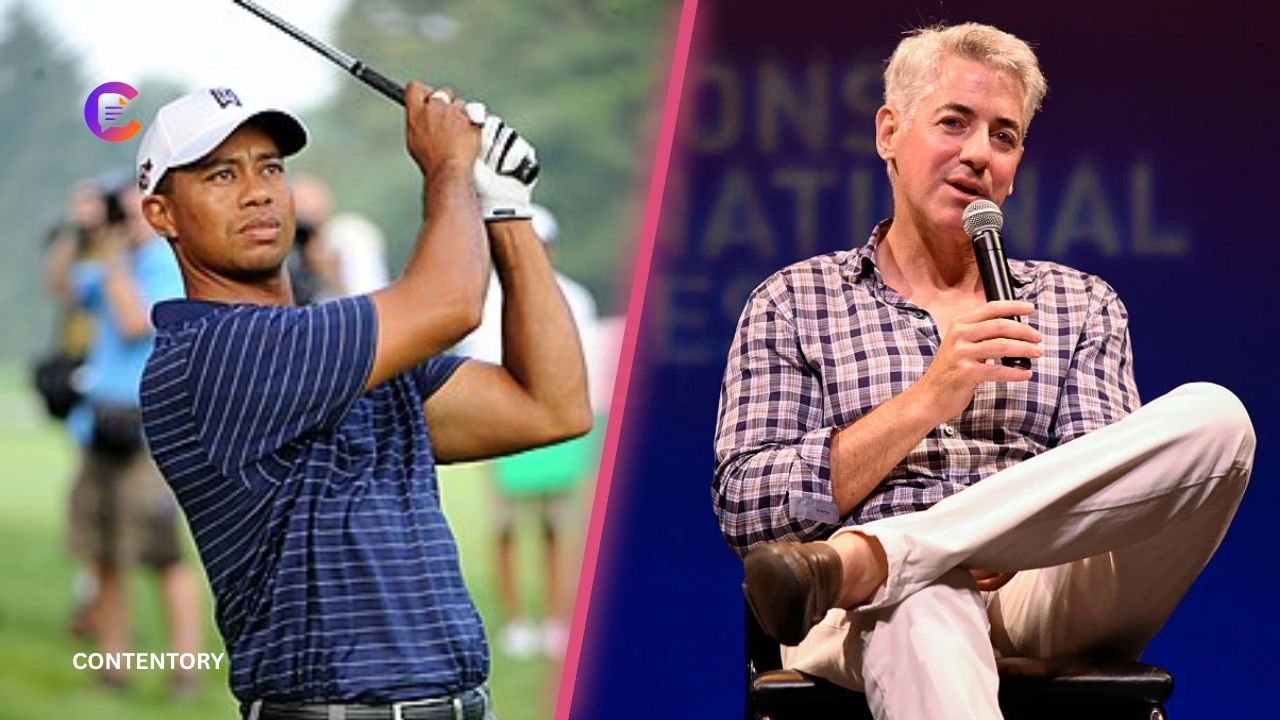
Tiger Woods and Bill Ackman come from completely different professional worlds, yet both have built highly recognizable careers around discipline, competition, long-term strategy, and public visibility. Woods became one of the most accomplished golfers in history, while Ackman developed a reputation as an influential investor and the founder and chief executive of Pershing Square. Their careers have unfolded in sports and finance respectively, but both have expanded their professional identities beyond their primary fields.
Woods has combined elite golf with entrepreneurship and philanthropy through his TGR organization, while Ackman has built Pershing Square into a major investment firm and developed philanthropic initiatives through Pershing Square Philanthropies. Their stories also illustrate two different approaches to public success: Woods built his profile through athletic performance and global competition, while Ackman became known through investment decisions, corporate involvement, and public commentary.
Quick Bio: Tiger Woods and Bill Ackman
| Detail | Tiger Woods | Bill Ackman |
|---|---|---|
| Full Name | Eldrick Tont “Tiger” Woods | William Albert Ackman |
| Known For | Professional Golfer | Investor and Businessman |
| Born | December 30, 1975 | May 11, 1966 |
| Birthplace | Cypress, California, USA | New York City, USA |
| Nationality | American | American |
| Profession | Golfer, Entrepreneur | Investor, CEO |
| Education | Stanford University | Harvard College, Harvard Business School |
| Major Organization | TGR | Pershing Square |
| Major Achievement | 15 Major Championships | Founded Pershing Square in 2003 |
| PGA TOUR Wins | 82 | — |
| Public Profile | Sports and Business | Investment and Business |
Who Are Tiger Woods and Bill Ackman?
Tiger Woods, whose full name is Eldrick Tont “Tiger” Woods, was born on December 30, 1975, in Cypress, California. He became a professional golfer in 1996 after an extraordinary amateur career that included three U.S. Junior Amateur titles, three U.S. Amateur titles, and an NCAA individual championship at Stanford. His professional career eventually produced 15 major championships and 82 PGA TOUR victories, placing him among the most accomplished players in golf history.
Bill Ackman is an American investor and businessman who founded Pershing Square in the early 2000s. Pershing Square describes itself as an alternative asset-management company focused on concentrated investments in established businesses with durable characteristics and predictable cash flows. Ackman also serves in leadership roles connected with Howard Hughes Holdings and Pershing Square SPARC Holdings, while remaining involved in philanthropic activities through the Pershing Square Foundation.
Tiger Woods’ Early Life and Golfing Background
Woods developed an interest in golf at an exceptionally young age. His official biography says he began watching his father, Earl Woods, hit golf balls when he was only six months old and started imitating his swing. By age two, he had already appeared on television putting with entertainer Bob Hope, and by age three he had shot 48 for nine holes. These early experiences became the foundation for a competitive career that would eventually transform professional golf.
His amateur achievements reinforced the idea that Woods was developing into an unusual talent. He attended Stanford University in 1994 and won 10 collegiate events in two years, including the NCAA championship. He then entered professional golf in 1996, beginning a career that quickly moved from promising young player to international sports star.
Bill Ackman’s Early Life and Education
Ackman developed his professional interests in business and investment rather than athletics. He earned a Bachelor of Arts from Harvard College, graduating magna cum laude, and later completed an MBA at Harvard Business School. His education provided a foundation for a career centered on financial analysis, corporate strategy, and investment management.
Before establishing Pershing Square, Ackman co-founded Gotham Partners in 1992, where he managed public and private equity investments. He had also begun his career in real-estate investment banking at Ackman Brothers and Singer. These earlier experiences helped shape the investment approach that he later developed through Pershing Square, which became known for concentrated positions and active engagement with portfolio companies.
Explore More Unique Article: Ray Dalio and Patricia Poppe
Tiger Woods’ Rise to Golf Stardom
Woods turned professional in 1996 and rapidly changed expectations for a young golfer entering the PGA TOUR. His first Masters victory came in 1997, when he won at Augusta National by 12 strokes. That victory made him the youngest Masters champion at the time and immediately established him as one of golf’s biggest emerging stars. His combination of power, precision, confidence, and athletic preparation attracted audiences well beyond traditional golf fans.
His dominance continued through the late 1990s and 2000s. Woods became the first golfer to hold all four professional major championships simultaneously when his 2001 Masters victory completed the so-called “Tiger Slam.” He later won the 2019 Masters, giving him five Masters titles and ending an 11-year major-championship drought. His 15 professional majors remain second only to Jack Nicklaus’s 18.
Bill Ackman’s Journey Into Investing
Ackman founded Pershing Square in 2003 after his earlier experience at Gotham Partners. The firm developed a concentrated investment strategy, focusing on businesses that Pershing Square considers high-quality, predictable, and capable of generating durable cash flow. Rather than simply taking passive positions, the firm has often worked actively with portfolio companies.
Pershing Square has continued to evolve under Ackman’s leadership. Its current structure includes several permanent-capital vehicles, and the company reported total firm assets under management of approximately $33 billion on its current corporate website. In April 2026, Pershing Square USA completed its U.S. listing, marking another significant stage in the firm’s development.
Tiger Woods’ Major Golf Achievements
Woods’ professional record is unusually extensive. The PGA TOUR lists him with 82 PGA TOUR victories, tying Sam Snead for the all-time record, as well as official PGA TOUR earnings of more than $120.9 million. His 15 major championships include five Masters victories, four PGA Championships, three U.S. Opens, and three Open Championships.
His accomplishments also include the first two FedExCup championships in 2007 and 2009, 683 weeks at No. 1 in the Official World Golf Ranking, and a long series of scoring and tournament records. The PGA TOUR notes that he won 82 events and made 142 consecutive cuts from 1998 through 2005, illustrating the consistency that accompanied his peak years.
Bill Ackman and the Rise of Pershing Square
Pershing Square became the central professional achievement of Ackman’s career. Founded in 2003, the firm developed a reputation for making relatively concentrated investments and taking an active approach toward companies in which it holds positions. This strategy differs from the diversified approach used by many conventional investment funds and has kept Ackman highly visible within financial markets.
Ackman’s responsibilities have also extended beyond Pershing Square’s investment-management operations. He serves as Executive Chairman of Howard Hughes Holdings and as Chairman and CEO of Pershing Square SPARC Holdings. His corporate roles have therefore expanded his influence across investment management and public-company governance.
Their Business Ventures and Professional Influence
Woods has built a business structure that extends far beyond tournament golf. TGR, headquartered in Jupiter, Florida, brings together several ventures connected with his name, including TGR Design, TGR Live, and the TGR Foundation. TGR Design focuses on golf-course development, while TGR Live produces events and experiences connected with the organization’s philanthropic work.
Ackman’s professional influence is concentrated more directly in finance and corporate investment. Through Pershing Square, he has participated in major corporate campaigns and investments, while his role at Howard Hughes Holdings gives him another platform in the business world. Pershing Square’s current corporate structure demonstrates how his career has moved beyond traditional hedge-fund management into permanent capital, public markets, and corporate leadership.
Tiger Woods’ Life Beyond Professional Golf
Although golf remains central to Woods’ public identity, his activities outside competition have become increasingly important. Through TGR, he has developed interests in golf-course design, events, hospitality, and charitable work. The organization describes TGR as a parent brand bringing together his entrepreneurial and philanthropic activities under one structure.
Education has been especially important to Woods’ philanthropic work. The TGR Foundation was founded in 1996 by Woods and his parents, Earl and Tida Woods. The foundation says it has supported young people through education programs for three decades, with a particular focus on students from under-resourced communities. In 2026, the foundation marked its 30th anniversary and continued highlighting education as the center of its mission.
Bill Ackman’s Public Profile and Philanthropy
Ackman has become a recognizable figure not only because of his investments but also because of his willingness to discuss business, markets, and public issues. His investment decisions and opinions can attract substantial attention from financial media, making his public profile different from that of a traditional private money manager. His role at Pershing Square has placed him at the center of numerous discussions about corporate strategy and investment philosophy.
Philanthropy is another significant part of Ackman’s public life. He founded the Pershing Square Foundation in 2006, and Pershing Square Philanthropies says its initiatives have committed more than $930 million in grants and investments across areas including health and medicine, education, economic development, and innovation. These activities represent a separate dimension of Ackman’s career beyond investment management.
Their Wealth and Financial Success
Tiger Woods has generated substantial financial success through professional golf, endorsements, business ventures, and other commercial activities. The PGA TOUR lists his official career tournament earnings at more than $120.9 million. However, official tournament earnings are only one component of an athlete’s finances, and they should not be confused with personal net worth.
Ackman’s financial position is similarly difficult to reduce to a single verified personal net-worth figure. Pershing Square currently reports about $33 billion in total firm assets under management, but those assets belong to investment vehicles and clients rather than representing Ackman’s personal wealth. For both men, publicly quoted net-worth estimates should therefore be treated differently from documented professional earnings or firm assets.
Family and Personal Lives
Woods is the son of Earl Woods and Kultida Woods. He has two children, Sam Alexis and Charlie Axel, and has generally kept many aspects of his family life separate from the details of his professional business activities. His parents also played an important role in his early development and later philanthropic work, particularly through the creation of the foundation that became TGR Foundation.
Ackman’s family background is connected to the New York business and real-estate world. His father, Lawrence D. Ackman, worked for Ackman-Ziff Real Estate Group and invested alongside his son. Bill’s professional life has also included a family philanthropic dimension through the Pershing Square Foundation. As with Woods, however, his public profile is primarily defined by his professional activities rather than private family details.
Challenges and Major Turning Points
Woods’ career has included significant physical setbacks and periods away from competitive golf. Injuries and surgeries repeatedly interrupted his playing schedule, including major back problems that affected his ability to compete consistently. His 2019 Masters victory became an especially notable comeback moment because it came more than a decade after his previous major championship victory in 2008.
Ackman’s career has also included periods of controversy, difficult investments, and intense public scrutiny. Active investing can expose managers to large swings in both financial results and public opinion, particularly when positions become the subject of corporate disputes or market debates. Rather than presenting every episode as either a success or failure, his career is best understood through the investment strategy, corporate positions, and long-term development of Pershing Square.
What Makes Their Stories Notable?
The most obvious difference between Woods and Ackman is their profession. Woods built his reputation through individual athletic performance, while Ackman built his through investment analysis, capital allocation, and corporate involvement. Yet their careers share a common emphasis on preparation, risk management, competition, and long-term performance. Both have also created organizations that extend their influence beyond their original professional roles.
Their stories also demonstrate how modern public figures can build multiple professional identities. Woods is now associated with golf, business, design, events, and education-focused philanthropy through TGR. Ackman combines investment management, corporate leadership, and philanthropy through Pershing Square and related organizations. Their careers therefore provide two very different examples of how professional success can develop into broader business and philanthropic platforms.
Conclusion
Tiger Woods and Bill Ackman have followed dramatically different professional paths, but both have built careers that extend well beyond their original areas of expertise. Woods transformed himself from a young golf prodigy into a 15-time major champion with 82 PGA TOUR victories, while Ackman developed Pershing Square into a major investment organization after beginning his career in finance and co-founding Gotham Partners. Their documented achievements show how sustained focus and professional specialization can produce influence on a global scale.
Their current activities also reveal a broader side of their careers. Woods continues to operate TGR and support education through TGR Foundation, while Ackman remains active in investment management, corporate leadership, and philanthropy. Neither man’s professional story can be fully understood through a single number such as tournament wins, career earnings, or firm assets. Together, their biographies show two distinct routes from professional excellence to entrepreneurship, leadership, and public influence.
Frequently Asked Questions
Who is Tiger Woods?
Tiger Woods is an American professional golfer and entrepreneur who has won 15 major championships and 82 PGA TOUR events.
Who is Bill Ackman?
Bill Ackman is an American investor and businessman who founded Pershing Square and serves as its CEO.
How many major championships has Tiger Woods won?
Tiger Woods has won 15 professional major championships, including five Masters titles.
How many PGA TOUR victories does Tiger Woods have?
Woods has 82 PGA TOUR victories, tying Sam Snead for the all-time record.
What is Bill Ackman known for?
Ackman is best known as the founder and CEO of Pershing Square and for his concentrated, active investment approach.
Are Tiger Woods and Bill Ackman business partners?
There is no reliable public evidence establishing a major business partnership between Tiger Woods and Bill Ackman. Their documented professional activities are primarily in golf and investment management.
What company did Bill Ackman found?
Bill Ackman founded Pershing Square Capital Management, which was established in 2003.
Does Tiger Woods have businesses outside golf?
Yes. His TGR organization includes TGR Design, TGR Live, TGR Foundation, and other ventures connected with his entrepreneurial activities.
STAY FOR MORE UPDATE: CONTENTORY