
Project management skills can help professionals take on greater responsibilities, lead teams, and progress toward new career opportunities. These abilities matter across industries, including technology, marketing, construction, healthcare, education, and business operations. Employers need people who can organize work, manage deadlines, communicate clearly, and solve problems when plans change. Developing these skills can help employees become more dependable contributors and prepare for leadership roles.
However, becoming a stronger project manager requires more than learning how to create schedules or assign tasks. Professionals also need to understand business priorities, motivate colleagues, manage risks, and measure results. The best way to improve is through a combination of practical experience, structured learning, feedback, and consistent reflection. By strengthening technical and interpersonal abilities together, professionals can improve their performance and build a clearer path toward long-term career growth.
Understand the Core Project Management Skills
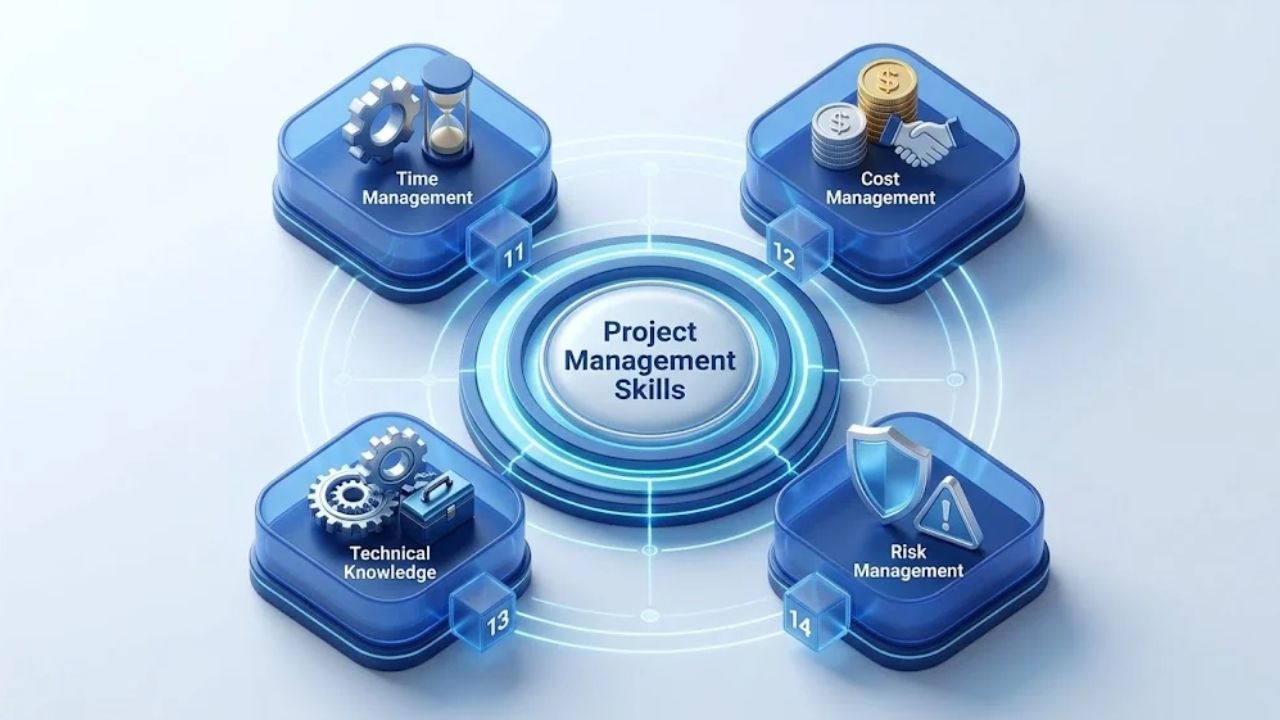
Before improving your abilities, identify the skills that make projects successful. Project managers need to define goals, organize resources, estimate timelines, track budgets, and coordinate people working toward a shared outcome. They must also recognize risks, resolve conflicts, and keep stakeholders informed. These responsibilities require both technical knowledge and the ability to make sound decisions under pressure.
The Project Management Institute (PMI) groups professional development into three broad areas: ways of working, power skills, and business acumen. This framework highlights the importance of selecting suitable project methods, working effectively with people, and understanding how projects support wider organizational goals. You can explore the framework through the PMI Talent Triangle. Use these categories to identify your strengths and decide which abilities deserve more attention.
Improve Planning and Time Management
Effective planning gives a project direction before the team begins execution. Start by defining the desired outcome, identifying major deliverables, and dividing the work into manageable tasks. Assign responsibilities, establish realistic deadlines, and identify dependencies between activities. A clear plan helps everyone understand what needs to happen, who owns each task, and how individual contributions support the final result.
Time management also involves responding to unexpected changes. Tasks may take longer than expected, resources may become unavailable, or clients may revise their requirements. Review progress regularly and adjust schedules when necessary. Avoid treating every deadline as equally urgent. Instead, prioritize work according to its importance, dependencies, and impact on the project. These habits help professionals deliver more predictable results without placing unnecessary pressure on their teams.
Strengthen Communication and Leadership
Communication is essential when several people contribute to one project. A project manager must explain goals, clarify responsibilities, share progress, and communicate changes in a timely manner. Strong communication also involves listening carefully, asking useful questions, and adapting explanations to different audiences. Team members may need detailed instructions, while senior stakeholders often prefer concise updates about progress, costs, risks, and decisions.
Leadership requires more than distributing assignments. Effective leaders build trust, encourage collaboration, and help colleagues overcome obstacles. When disagreements arise, focus on the underlying issue rather than blaming individuals. Invite different perspectives and agree on practical next steps. Professionals can strengthen these skills by leading small meetings, presenting project updates, mentoring colleagues, and requesting feedback on their communication style. Consistent practice helps build confidence and prepares employees for broader leadership responsibilities.
Learn Risk Management and Problem-Solving
Every project contains uncertainty. Risks may include changing requirements, unexpected expenses, technical failures, staff shortages, or delays from external suppliers. Strong project managers identify potential problems before they become serious. Create a simple risk register that records each risk, its likelihood, potential impact, responsible owner, and planned response. Review the register throughout the project rather than treating it as a document to complete only at the beginning.
Problem-solving also requires separating symptoms from root causes. If a project repeatedly misses deadlines, examine workload estimates, approval processes, resource availability, and communication gaps. Use available evidence to compare possible solutions before making a decision. After resolving an issue, record what happened and what the team learned. This habit helps professionals recognize patterns, make better decisions in future projects, and demonstrate their ability to manage uncertainty.
Develop Technical Skills and Learn Project Management Tools
Digital tools can make project planning, collaboration, reporting, and resource tracking more efficient. Depending on the workplace, useful platforms may include Microsoft Project, Jira, Trello, Asana, Monday.com, or spreadsheet applications. Learn how to create task lists, assign owners, set deadlines, monitor dependencies, and build progress reports. Focus on the features that solve real problems rather than trying to master every function at once.
Technical skills should also include familiarity with project management approaches. Predictive methods can suit projects with relatively stable requirements, while Agile practices support iterative development and frequent feedback. Hybrid approaches combine elements of both when the situation calls for flexibility. Choose a method based on the project’s goals, uncertainty, stakeholders, and constraints. Understanding several approaches makes you more adaptable and better prepared to work across different industries and teams.
Build Business Acumen and Strategic Thinking
Career growth often depends on understanding why a project matters, not just whether it finishes on time. Business acumen helps professionals connect project decisions with organizational goals, customer needs, costs, and expected benefits. For example, a marketing project may meet its delivery deadline but still fall short if it fails to reach the intended audience. Project managers should therefore understand the outcomes stakeholders expect and how the team will evaluate success.
To develop strategic thinking, learn about your organization’s priorities, customers, competitors, and financial constraints. Ask how project deliverables create value and which results matter most to decision-makers. When proposing changes, explain their likely effects on cost, timing, quality, and business outcomes. PMI’s project success guidance emphasizes the importance of delivering value beyond simply completing planned tasks. This broader perspective can help professionals prepare for senior project and program management positions.
Gain Practical Experience Through Real Projects
Training provides useful knowledge, but practical experience shows how well you can apply it. You do not need to hold a formal project manager title to begin building relevant skills. You might coordinate a team presentation, organize a department event, manage a website update, oversee a customer campaign, or lead a process improvement initiative. These assignments offer opportunities to practice planning, delegation, communication, and progress tracking.
After each project, evaluate the outcome honestly. Compare the original plan with actual results, identify unexpected challenges, and note which decisions worked well. Ask colleagues or supervisors what you could improve next time. Keep a record of your responsibilities and measurable achievements, such as reducing delays, improving coordination, or completing work within an agreed budget. These examples can strengthen your résumé and help you explain your capabilities during performance reviews or job interviews.
Consider Training, Certifications, and Mentorship
Structured learning can help professionals fill knowledge gaps and understand recognized project management practices. Online courses, workshops, professional books, and industry webinars offer different ways to learn. Choose resources that match your experience level and career goals. Beginners may benefit from foundational training, while experienced professionals might focus on Agile delivery, stakeholder management, budgeting, or risk assessment.
Certifications can also demonstrate commitment to professional development. Depending on your background and objectives, you might explore the Certified Associate in Project Management (CAPM), Project Management Professional (PMP), or an Agile-related credential. Review each program’s eligibility requirements, costs, and learning objectives before enrolling. A mentor can add another valuable perspective by sharing practical lessons and helping you prepare for new responsibilities. Certification alone does not guarantee promotion, so combine formal learning with evidence of successful project delivery.
Explore Two Factor Authentication Security What Every User Should Know
Create a Personal Development Plan
A personal development plan turns broad career ambitions into manageable actions. Begin by assessing your current strengths and weaknesses. You might be confident with scheduling but less comfortable presenting to senior leaders. Another professional may communicate well but struggle with cost estimation or risk analysis. Identify two or three priorities instead of attempting to improve everything simultaneously.
Set specific goals with deadlines and ways to measure progress. For example, you could lead a small project within three months, complete a relevant course, or improve the quality of weekly project reports. Schedule regular reviews to evaluate your progress and adjust your plan. Discuss your goals with a manager or mentor who can recommend suitable assignments. A consistent development routine makes progress easier to track and helps connect skill-building activities with future career opportunities.
Measure Progress and Prepare for Career Advancement
Improving project management skills becomes more meaningful when you can demonstrate results. Track relevant outcomes, including delivery times, budget performance, stakeholder satisfaction, risks resolved, and improvements to team processes. Use measures that fit your project’s purpose rather than collecting numbers without a clear reason. Keep records of challenges you handled, decisions you made, and lessons that changed how you work.
When preparing for a promotion or a new role, present examples that show both your responsibilities and your impact. Explain the situation, the actions you took, and the outcome. Highlight how you managed competing priorities, resolved problems, or helped a team reach its goals. Review job descriptions for positions you want and compare their requirements with your current abilities. This process helps you identify the next skills to develop and communicate your readiness for greater responsibility.
Conclusion
Learning how to improve project management skills for career growth starts with understanding your current abilities and choosing practical areas for improvement. Strong planning, communication, leadership, risk management, technical knowledge, and business awareness can help professionals manage projects more effectively. Real-world experience, structured training, mentorship, and regular feedback turn these abilities into lasting strengths.
Career advancement rarely depends on one skill or qualification alone. Professionals make stronger progress when they consistently deliver results, learn from mistakes, and demonstrate how their work supports organizational goals. Create a realistic development plan, track your achievements, and seek opportunities to take on greater responsibility. Over time, these steps can strengthen your professional reputation and prepare you for more challenging project management roles.
Frequently Asked Questions
What are the most important project management skills for career growth?
Planning, communication, leadership, time management, risk assessment, problem-solving, and stakeholder management are important skills. Business acumen and adaptability also help professionals connect project work with organizational goals.
How can beginners develop project management skills?
Start by coordinating a small project at work, school, or within a community organization. Practice setting goals, assigning tasks, tracking deadlines, and communicating progress. Review the results and ask others for feedback.
Which tools should project managers learn?
Useful tools depend on the industry and team. Microsoft Project, Jira, Trello, Asana, Monday.com, and spreadsheets can support planning and collaboration. Learn the tools your workplace uses most often.
Are project management certifications necessary for career growth?
Certifications can demonstrate formal knowledge and may help with certain job requirements. However, they do not guarantee promotion. Practical experience, communication, leadership, and successful project outcomes remain important.
Get More Update CONTENTORY