
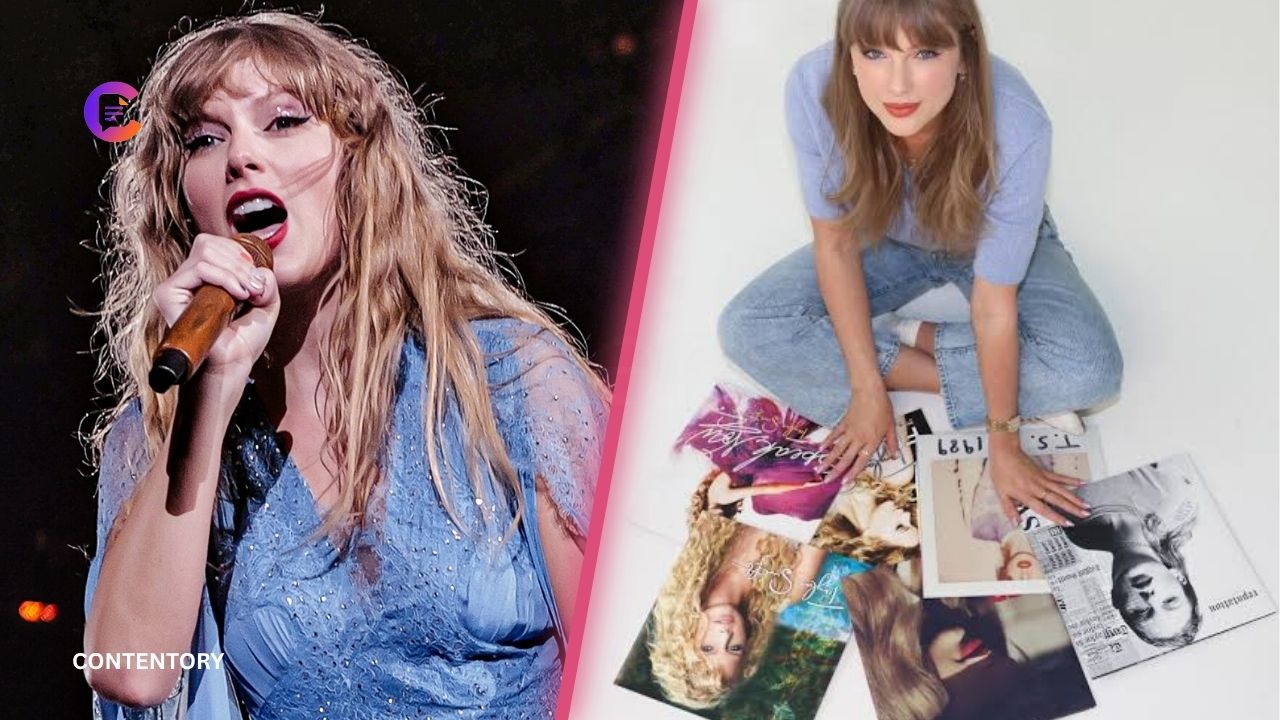
Taylor Swift’s albums do more than collect songs. Together, they trace one of modern music’s most closely followed artistic journeys. Her career began with country storytelling and gradually expanded into pop, indie folk, synth-pop, and more experimental territory. Each record introduced a distinct visual world, emotional tone, and chapter in her songwriting. From Taylor Swift to The Life of a Showgirl, her albums have repeatedly changed expectations while keeping storytelling at the center of her music.
For listeners, the appeal of Taylor Swift albums often comes from how clearly each era feels different. A new record can change her sound, fashion, imagery, and even the way fans understand earlier songs. Her official archive now presents these chapters as a connected journey through her eras. This guide explores that journey in release order, looking at the stories, sounds, collaborations, and cultural moments that shaped each album and helped turn Swift’s discography into a defining part of contemporary pop culture.
Taylor Swift: The Beginning of the Story
Released in 2006, Taylor Swift introduced a teenage songwriter with a strong gift for turning personal observations into accessible country songs. Tracks such as “Tim McGraw” established her early identity as a young storyteller. The album balanced romantic uncertainty with the confidence of someone determined to make her voice heard. At only 16, Swift had already begun building the songwriting approach that would become one of the most recognizable elements of her career.
The debut era also established a pattern that would follow Swift throughout her career. She wrote about relationships, growing up, friendship, and the emotional details of ordinary experiences. Instead of presenting herself as a distant celebrity, she built songs around situations listeners could recognize. That direct storytelling helped create a strong connection with younger audiences. It also gave her a foundation that allowed later albums to become increasingly ambitious without abandoning the personal perspective that first attracted listeners.
Fearless: Finding a Bigger Audience
Fearless, released in 2008, expanded Swift’s audience and became her first No. 1 album. Its biggest songs demonstrated how naturally her country songwriting could reach mainstream pop listeners. “Love Story” became a major crossover hit, while songs such as “You Belong With Me” strengthened her reputation for writing emotionally specific stories about romance, insecurity, and adolescence. Grammy notes that Fearless later became the first of Swift’s four Album of the Year winners.
The era represented more than commercial growth. Swift was beginning to understand how powerful a carefully constructed album world could be. The songs retained youthful emotion, but the songwriting became more polished and confident. The result helped establish a formula she would continue refining: recognizable melodies, vivid narratives, memorable bridges, and lyrics that invited listeners to connect their own experiences with hers. Fearless became an early example of how her albums could function as complete chapters rather than simple collections of singles.
Speak Now: Swift Takes Full Control
With Speak Now, Swift moved toward an even stronger sense of authorship. The 2010 album became notable for being written entirely by Swift, without co-writers. That decision placed the focus directly on her songwriting voice. The record explored romance, regret, public pressure, family memories, and the excitement of making bold choices. Songs such as “Mine,” “Back to December,” and “Mean” showed different sides of her increasingly confident writing style.
The Speak Now era also demonstrated Swift’s willingness to let songs carry detailed narratives. She could move from intimate confession to sharp confrontation without losing the album’s emotional cohesion. The original record belonged firmly to her country-pop period, yet its themes reached beyond genre boundaries. Years later, she revisited the era through Speak Now (Taylor’s Version), one of the re-recorded albums created as part of her effort to regain ownership of her earlier catalog.
Red: The Album That Broke the Rules
Red, released in 2012, became a major turning point in Swift’s musical evolution. The album moved between country, pop, rock, and electronic influences instead of committing to one sound. Its emotional range matched its musical variety. “All Too Well,” “We Are Never Ever Getting Back Together,” “22,” and “I Knew You Were Trouble” each represented a different part of the album’s personality.
The record also showed Swift becoming more interested in emotional contradiction. Love could feel thrilling and painful at the same time. Memories could be comforting and destructive. That complexity gave Red a lasting reputation among fans and critics. Its later re-recording, Red (Taylor’s Version), expanded the original project with previously unreleased material and brought renewed attention to songs that had already become important parts of her catalog.
1989: Taylor Swift Becomes a Pop Superstar
1989 marked Swift’s decisive move into pop. Released in 2014, the album embraced synth-driven production and polished pop songwriting while retaining her lyrical focus on relationships and identity. “Blank Space,” “Style,” “Wildest Dreams,” and “Shake It Off” became defining songs of the era. The album’s success also produced a historic Grammy achievement when Swift became the first woman to win Album of the Year twice.
The 1989 era represented a transformation in more than sound. Swift adopted a brighter, more deliberately constructed visual identity and embraced the possibilities of mainstream pop. Yet the songwriting remained central. She used polished production to tell stories about romance, reputation, independence, and self-image. Years later, 1989 (Taylor’s Version) allowed her to revisit that breakthrough period while adding previously unreleased “From the Vault” songs to the project.
Reputation: A Darker Chapter
After the enormous visibility of the 1989 period, Swift returned with reputation in 2017. The album carried a darker aesthetic and addressed themes involving public perception, media narratives, privacy, love, and personal reinvention. “Look What You Made Me Do” announced a striking change in tone, while songs such as “Delicate” and “Call It What You Want” revealed a more intimate side beneath the album’s aggressive exterior.
The significance of reputation lies partly in its contrast with the previous era. Swift did not simply repeat the sound or image that had made 1989 successful. Instead, she created a world built around shadows, snakes, secrecy, and the tension between public reputation and private relationships. The era demonstrated her growing control over artistic reinvention and reinforced the idea that each album could challenge expectations established by the previous one.
Lover: Returning to Color and Romance
Lover, released in 2019, brought a major visual and emotional shift. The darker atmosphere of reputation gave way to brighter colors, softer imagery, and songs that explored love from several perspectives. The album included romantic tracks, personal reflections, political themes, and songs about insecurity. “Lover,” “Cruel Summer,” and “You Need to Calm Down” became especially recognizable parts of the era.
What made Lover interesting was its willingness to embrace openness. Swift explored happiness alongside vulnerability instead of presenting romance only through heartbreak. The album also became her final studio album of the 2010s. Its broad palette showed that her songwriting could accommodate pop anthems, intimate moments, and social commentary within one project, even when the songs sounded very different from one another.
Folklore and Evermore: A Creative Reinvention
In 2020, Swift surprised listeners with folklore, an album that moved away from the glossy pop production of her previous work. Created during the pandemic, the record leaned into indie folk, alternative textures, fictional characters, and atmospheric storytelling. Collaborations with Aaron Dessner and Jack Antonoff helped shape a sound that felt quieter and more reflective. Grammy describes folklore as a major part of Swift’s evolving musical world and notes its Album of the Year win in 2021.
Later that same year, Swift released evermore, treating it as a companion to folklore. The two albums shared creative DNA but developed different moods and narratives. Swift leaned further into fictional storytelling and literary imagery, demonstrating that her songwriting did not need to remain strictly autobiographical. Together, folklore and evermore expanded the possibilities of the Swift album format and introduced a more subdued chapter in her career.
Midnights: Looking Back at the Night
Midnights, released in 2022, brought Swift back toward synth-pop while maintaining the introspective writing associated with her pandemic-era albums. She described the project as a collection centered on sleepless nights and reflections from different periods of her life. Songs such as “Anti-Hero,” “Lavender Haze,” and “Bejeweled” combined polished pop production with themes of insecurity, relationships, self-perception, and fame.
The album became another landmark in Swift’s career. At the 2024 Grammy Awards, Midnights won Album of the Year, giving Swift her fourth victory in the category and making her the first artist in Grammy history to win it four times. The achievement reinforced how consistently her albums could reshape both commercial expectations and awards history.
The Tortured Poets Department: A Confessional Era
Swift announced The Tortured Poets Department at the 2024 Grammy Awards while accepting her 13th Grammy for Best Pop Vocal Album for Midnights. The album arrived on April 19, 2024, and became her 11th studio album. Its initial edition contained 16 tracks, while The Anthology expanded the project to 31 tracks overall. Post Malone and Florence + The Machine appeared as collaborators on “Fortnight” and “Florida!!!” respectively.
The album focused heavily on emotional aftermath, self-examination, complicated relationships, fame, and the pressure surrounding Swift’s public life. Its literary presentation fit the title, while its writing frequently blurred the line between autobiography and artistic storytelling. The project also continued Swift’s habit of building an extensive world around each release through alternate editions, visual imagery, bonus tracks, and hidden references. It became another example of how a Swift album can extend beyond the music itself.
The Life of a Showgirl: A New Era
The Life of a Showgirl represents the newest chapter in Swift’s album story. Her official website now includes the project in its archive alongside the earlier eras, and the official store lists physical editions of the album. The site identifies a 12-track project and features tracks including “The Fate of Ophelia,” “Elizabeth Taylor,” “Opalite,” “Father Figure,” “Eldest Daughter,” and the title track featuring Sabrina Carpenter.
The album adds another stylistic chapter to a discography already defined by reinvention. Its arrival also gives Swift another opportunity to reshape her visual identity and songwriting world. Because the project is now part of her official archive, it belongs in any current overview of Taylor Swift albums. The significance of the era will ultimately depend on how listeners respond to the music, but its place in the evolving timeline of her career is already established.
The Taylor’s Version Albums and Ownership Story
Swift’s album history also includes her re-recording campaign. She released Fearless (Taylor’s Version) in 2021, followed by Red (Taylor’s Version) that same year. She later released Speak Now (Taylor’s Version) in 2023 and 1989 (Taylor’s Version) in 2023. These projects allowed her to revisit earlier albums while adding previously unreleased material. Her official archive continues to present these re-recorded albums as distinct eras within her broader musical history.
The campaign became especially meaningful because of Swift’s long-running dispute over ownership of her early master recordings. In 2025, Swift announced that she had acquired her music catalog, including her albums, videos, concert films, album artwork, photography, and unreleased songs. In her official statement, she described the moment as achieving a long-held dream. That development gave the Taylor’s Version project an especially significant place in her career story.
Why Every Taylor Swift Album Feels Like Its Own Era
One reason Taylor Swift albums generate such sustained interest is the connection between music and visual storytelling. Each era introduces its own colors, clothing, artwork, promotional language, production style, and emotional atmosphere. Fans can often identify an album from a single photograph or color palette. That consistency turns an album campaign into a cultural event rather than a simple release.
Swift has also encouraged listeners to look for connections between projects. Lyrics can reference earlier songs, visual details can invite theories, and new recordings can change how fans understand older material. The result is a discography that rewards both casual listening and close examination. Grammy has noted how The Eras Tour helped bring renewed attention to older songs and connected Swift’s different periods into one larger musical narrative.
Explore more Lance Barber Young: Everything You Need to Know About His Early Life and Career
Taylor Swift’s Musical Evolution and Lasting Impact
Looking across the full catalog, Swift’s greatest strength may be her willingness to change without abandoning songwriting. She moved from country to mainstream pop, then explored indie folk before returning to synth-pop and developing increasingly complex hybrid styles. Each transition could have alienated part of her audience, yet her storytelling provided continuity. Listeners could follow her into new genres because the emotional perspective remained recognizable.
Her awards record reflects that sustained influence. Swift has won Album of the Year four times for Fearless, 1989, folklore, and Midnights. Grammy identifies her as the first and only artist to reach four wins in the category. Beyond awards, her albums have influenced how contemporary artists approach songwriting, album rollouts, visual storytelling, fan communities, and ownership of recorded music.
Conclusion
The story of Taylor Swift albums is ultimately a story of reinvention. Her debut established her as a young country songwriter, while Fearless expanded her audience. Speak Now strengthened her authorship, Red widened her musical palette, and 1989 transformed her into a full-scale pop superstar. reputation, Lover, folklore, evermore, and Midnights continued that cycle of change. The Tortured Poets Department added another deeply reflective chapter, followed by the newer The Life of a Showgirl era.
What makes the catalog remarkable is not simply its size or commercial success. Swift has built albums that document changing perspectives while also creating distinct worlds around each release. The Taylor’s Version recordings added another layer by turning ownership into part of the artistic narrative. With her catalog now back under her ownership and new music continuing to expand her official archive, her album journey remains an evolving story rather than a finished one.
Frequently Asked Questions
How many Taylor Swift albums are there?
As of 2026, Taylor Swift has released 12 original studio albums, from Taylor Swift through The Life of a Showgirl. She has also released four re-recorded albums under the Taylor’s Version project.
What was Taylor Swift’s first album?
Taylor Swift’s self-titled debut album was released in 2006. It introduced her as a teenage country songwriter and included “Tim McGraw,” her first major charting single.
Which Taylor Swift album won Album of the Year?
Swift has won Grammy Album of the Year four times with Fearless, 1989, folklore, and Midnights. Her fourth win came in 2024.
What is Taylor Swift’s latest album?
The latest album listed in Taylor Swift’s official archive is The Life of a Showgirl. Her official site lists it alongside her previous album eras.
What are Taylor’s Version albums?
Taylor’s Version albums are re-recordings of Swift’s earlier albums. She has released Fearless (Taylor’s Version), Red (Taylor’s Version), Speak Now (Taylor’s Version), and 1989 (Taylor’s Version).
Get More Update CONTENTORY